Start your 14-day free trial and discover how Kiroframe helps streamline your ML workflows

Machine Learning pipeline architecture: a practical blueprint for designing Reliable ML workflows

image of ml pipeline architecture
Machine learning has firmly moved beyond experimentation. Today, it is embedded in customer support systems, fraud detection platforms, recommendation engines, and internal decision-making tools across nearly every industry. According to “McKinsey’s” 2024 State of AI report, more than 70% of large enterprises now use machine learning or AI in at least one core business function, while overall investment in AI and ML continues to grow year over year. At the same time, “Gartner” warns that by 2026, a majority of enterprise ML models will fail to deliver expected value due to operational and architectural limitations rather than model quality itself. For many organizations, the question is no longer whether to use ML, but how to run it reliably in production.
This growing focus has pushed ML pipeline architecture into the spotlight. While early ML projects often relied on ad-hoc notebooks and manual steps, modern teams increasingly recognize that long-term success depends on well-designed, automated pipelines. In practice, model accuracy alone is not enough. Without structured workflows for data, training, deployment, and monitoring, even the best models degrade quickly or fail to deliver business value.
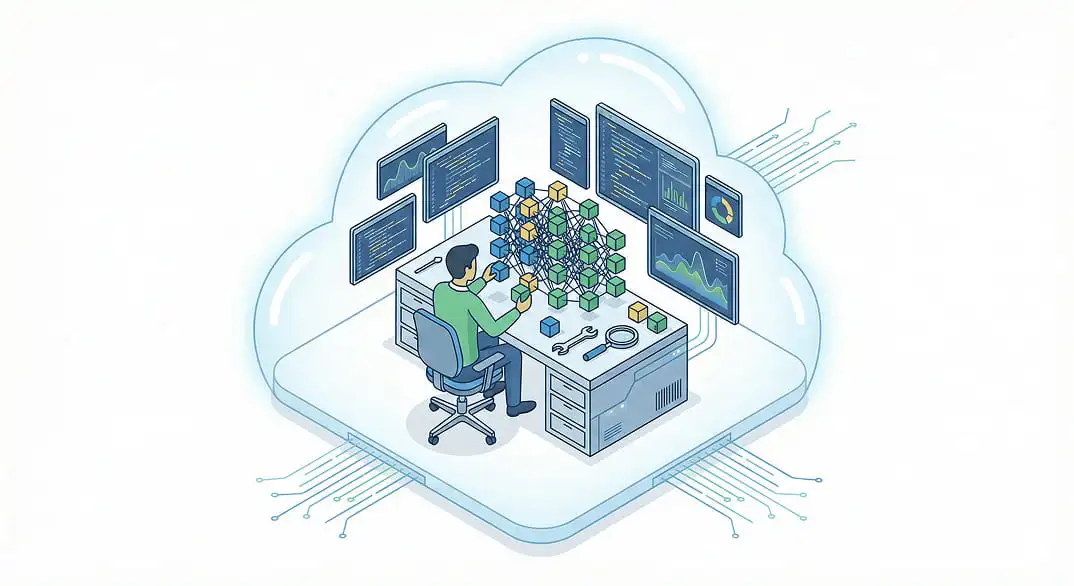
This article explores what ML pipeline architecture really means today, breaks down its core components, and outlines practical design principles to help teams build scalable, trustworthy machine learning systems.

What is ML pipeline architecture?

At its core, ML pipeline architecture defines how machine learning workflows are structured, automated, and connected from end to end. It describes the sequence of steps that transform raw data into deployed models — and how those steps are orchestrated, versioned, and monitored over time.
Unlike traditional data pipelines that typically focus on extracting, transforming, and loading data, ML pipelines must handle additional complexity. They include model training, evaluation, deployment, and continuous feedback loops. Each stage introduces uncertainty and change, making architectural decisions especially important.
A well-designed ML pipeline architecture enables teams to:
  • Reproduce experiments and results 
  • Scale training and inference reliably 
  • Track lineage between data, code, and models 
  • Detect and respond to model degradation 
Without these capabilities, ML systems tend to remain fragile and difficult to maintain.
mlops platform-kiroframe sign up
MLOps platform to automate and scale your AI development from datasets to deployment. Try it free for 14 days.

From experimentation to production pipelines

Many ML initiatives start in notebooks, where data scientists explore datasets and test models interactively. While this phase is essential, problems arise when experimental code is pushed directly into production.
ML pipeline architecture bridges this gap by separating exploration from production workflows. It formalizes the steps required to train and run models, ensuring that what works in development can be repeated consistently in real environments. This transition is especially important as teams grow and multiple stakeholders—data engineers, ML engineers, and platform teams—become involved.

Core Machine Learning pipeline components

Although implementations vary, most production-grade ML pipelines share a common set of components. Understanding these machine learning pipeline components is key to designing a robust architecture.
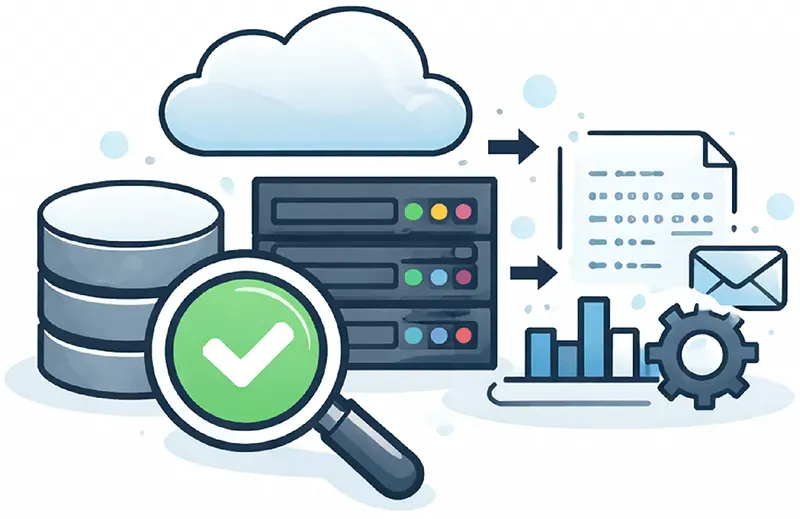
image of ml pipelines data ingestion validation

Data ingestion and validation

Every ML pipeline begins with data ingestion. Data may come from databases, data lakes, streaming systems, logs, or external APIs. At this stage, reliability matters more than volume.
Modern pipelines increasingly include automated validation checks:
  • Schema consistency 
  • Missing or anomalous values 
  • Distribution shifts compared to historical data 
These checks act as quality gates, preventing flawed data from silently propagating downstream.

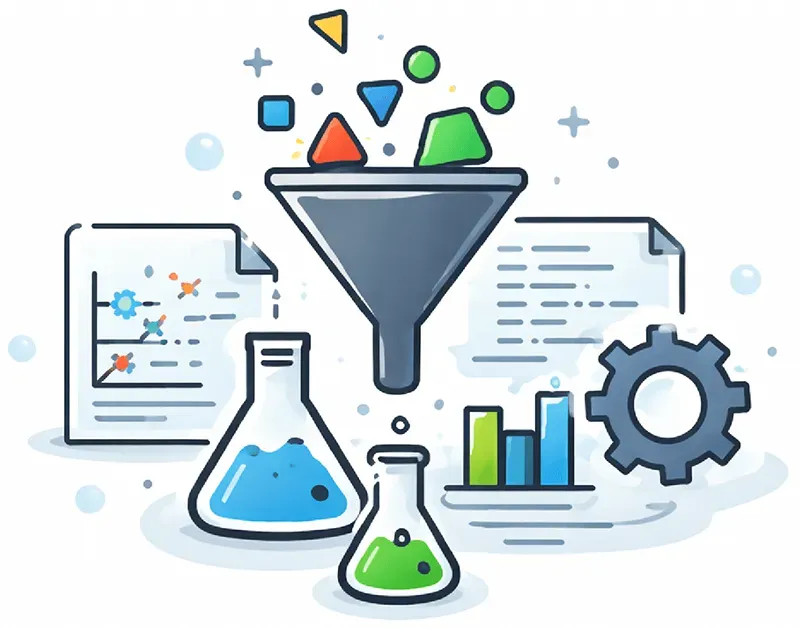
Data preparation and feature engineering

Raw data rarely fit model requirements without transformation. Feature engineering converts raw inputs into meaningful signals that models can learn from.
In mature architectures, feature logic is no longer hidden inside notebooks. Instead, it is implemented as reusable, versioned components. Some teams adopt feature stores to ensure that the same features are used consistently during both training and inference, reducing training-serving skew and operational risk.
image of ml pipelines data preparation feature engineering

Model training and optimization

The training stage is where data and algorithms come together. Modern ML pipeline architecture often supports:
  • Multiple parallel training runs
  • Hyperparameter tuning
  • Distributed compute across CPUs or GPUs
Training outputs are not just models, but also metadata: parameters, metrics, logs, and environment details. Capturing this information systematically is essential for reproducibility and later analysis.

Evaluation and validation

Before a model reaches production, it must be evaluated against clear acceptance criteria. These may include:
  • Statistical metrics (accuracy, precision, recall) 
  • Comparisons with previous model versions 
  • Business-oriented KPIs 
Some pipelines also include bias or fairness checks, especially in regulated or high-impact domains. Only models that pass validation thresholds are promoted further.
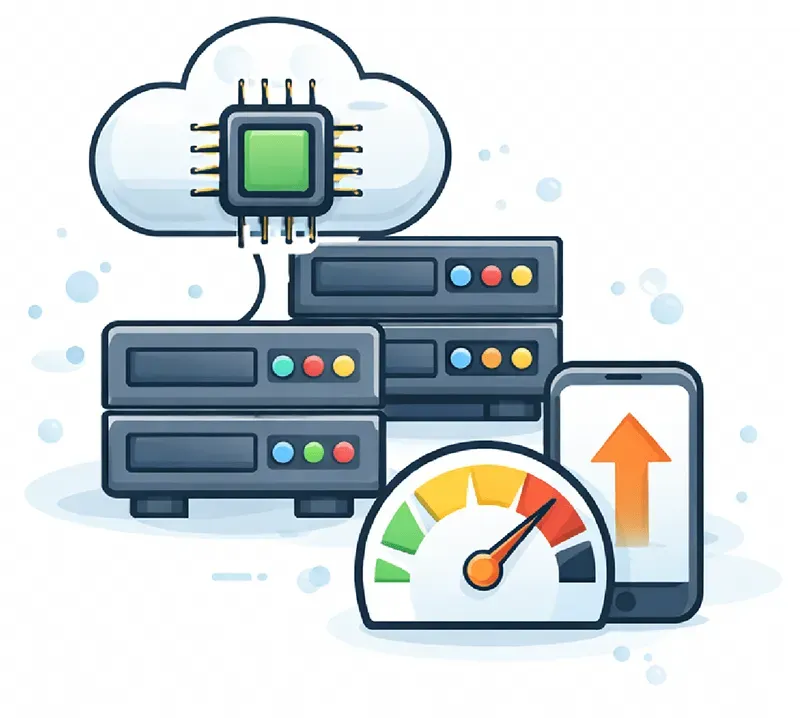
image of ml pipelines deployment serving

Deployment and serving

Deployment turns a trained model into a usable service. Depending on use case, this may involve:
  • Batch inference jobs 
  • Real-time APIs 
  • Streaming or near-real-time inference 
A common architectural practice is to register models in a centralized registry before deployment. This creates a clear boundary between training and serving and enables controlled rollouts, rollbacks, and experimentation strategies such as canary releases.

Monitoring and feedback loops

Once deployed, models interact with changing data and user behavior. Monitoring closes the loop by tracking:
  • Prediction quality over time 
  • Data and concept drift 
  • Latency and resource usage 
When degradation is detected, pipelines may trigger alerts, retraining workflows, or human review. In advanced setups, retraining is partially or fully automated, enabling continuous learning systems.

Architectural patterns in ML pipelines

There is no single “correct” ML pipeline architecture, but several common patterns have emerged.
image of ml pipelines evaluation validation

Linear Pipelines

Linear pipelines follow a straightforward, step-by-step sequence in which each stage runs only after the previous one completes. Data ingestion is followed by preprocessing, then model training, evaluation, and deployment—always in the same order. This simplicity makes linear pipelines easy to design, debug, and explain, especially for teams that are just starting with machine learning or working on a single, well-defined use case.
However, linear pipelines are limited when workflows grow more complex. Because each step depends on the previous one, they do not handle parallel experiments or conditional logic well. Even small changes, such as adding a new feature or testing a second model, may require re-running the entire pipeline.

Where this pattern works best:

Linear pipelines are commonly used in early-stage projects, internal analytics tools, or proof-of-concept models. For example, a startup building its first churn prediction model might run a nightly linear pipeline that pulls customer data from a database, trains a model once per day, and generates a report for the business team. The simplicity outweighs the lack of flexibility at this stage.

DAG-based pipelines

DAG-based pipelines model ML workflows as a directed acyclic graph, where each step is a node and dependencies are explicitly defined. Unlike linear pipelines, DAGs allow multiple steps to run in parallel and support branching logic. For instance, multiple feature sets or models can be trained simultaneously, and only the best-performing one is selected.
This approach significantly improves scalability and efficiency. If one component changes—such as a feature transformation — only the affected parts of the pipeline need to be re-executed. DAG-based pipelines also make complex workflows easier to reason about by visualizing dependencies and execution paths.

Where this pattern works best:

DAG-based pipelines are widely used in production ML systems at growing and enterprise-scale companies. A typical example is an e-commerce recommendation system that trains multiple models (collaborative filtering, content-based, and ranking) in parallel on shared datasets. Evaluation steps are then used to compare their performance, and the winning model is automatically promoted for deployment. This pattern supports experimentation without slowing down the overall workflow.

Event-driven pipelines

Event-driven pipelines are triggered by specific events rather than fixed schedules. These events may include the arrival of new data, detection of data drift, changes in upstream systems, or performance degradation in a deployed model. Instead of waiting for a nightly or weekly run, the pipeline reacts automatically when something meaningful happens.
This architecture enables near-real-time adaptability and reduces unnecessary computation. Pipelines run only when conditions require action, making them well-suited for dynamic environments where data and user behavior change rapidly.

Where this pattern works best:

Event-driven pipelines are common in real-time and high-frequency use cases. For example, a fraud detection system may retrain or recalibrate models when transaction patterns shift significantly, or a recommendation engine may update features when a surge of new user activity is detected. In these scenarios, reacting quickly to events is critical to maintaining model accuracy and business impact.

How these patterns evolve together

In practice, many organizations start with linear pipelines, evolve into DAG-based pipelines as complexity grows, and eventually introduce event-driven elements for critical models. Understanding these patterns helps teams choose the right level of architectural sophistication—without overengineering too early or limiting scalability later.

Designing for enterprise-scale requirements

As machine learning systems mature, architectural priorities naturally shift from experimentation speed to reliability, transparency, and governance. At scale, ML workflows are no longer owned by a single team or individual—they become shared infrastructure that must support collaboration, audits, and long-term evolution.
image of ml pipelines monitoring feedback loops

Automation and orchestration

Automation reduces human error and operational cost by standardizing how ML workflows are executed. Pipeline orchestration helps teams define dependencies between stages, manage retries, and observe execution state across complex workflows. DAG-based orchestration, in particular, enables parallel model training, conditional logic, and selective re-runs when only part of the pipeline changes.
In practice, teams often rely on orchestration layers that separate pipeline logic from experimentation code. Some organizations adopt open ecosystems such as Kubeflow or MLflow, while others use higher-level platforms that abstract orchestration details and focus on experiment structure and collaboration. For example, teams working in environments like Kiroframe typically treat pipelines as reusable, versioned workflows rather than one-off training scripts, which helps reduce operational friction as projects scale.
Importantly, the architectural principle remains the same regardless of tooling: pipelines should be automated, observable, and repeatable.

Observability and governance

As ML pipelines become business-critical, enterprises increasingly require end-to-end traceability—the ability to answer questions such as which dataset, parameters, and code version produced a given model, and when it was deployed. ML pipeline architecture supports this by enforcing consistent logging, artifact tracking, and lineage across all workflow stages.
This level of observability is essential not only for debugging, but also for compliance, audits, and internal trust. When models influence financial decisions, customer interactions, or operational processes, organizations must be able to explain how results were generated and reproduce them if needed. Well-architected pipelines make governance a built-in property rather than an afterthought.

Batch vs. real-time pipelines

Not all machine learning use cases require real-time inference. Many business problems—such as demand forecasting, churn analysis, or periodic risk scoring—are well served by batch pipelines that run on a fixed schedule. These pipelines are often simpler to operate, easier to debug, and more cost-efficient.
Real-time pipelines, on the other hand, are justified when predictions must respond immediately to changing conditions, such as fraud detection or dynamic pricing. A sound ML pipeline architecture makes this distinction explicit, allowing teams to support both patterns where needed without introducing unnecessary complexity. Over time, systems can evolve from batch to near-real-time as business requirements change.

Common pitfalls in ML pipeline architecture

Despite growing awareness, teams still encounter recurring issues:
  • Lack of versioning for data and models, making results impossible to reproduce 
  • Manual handoffs between stages, which introduce delays and errors 
  • Ignoring monitoring leads to silent performance decay 
  • Tightly coupled components, which limit scalability and flexibility 
Most of these problems stem from treating ML pipelines as one-off projects rather than long-lived systems.
Looking ahead, several trends are shaping how ML pipeline architecture evolves:
  • Greater use of event-driven retraining triggered by real-world signals 
  • More emphasis on metadata and lineage as first-class entities 
  • Increased automation across the entire lifecycle, from data ingestion to deployment 
As ML adoption deepens across industries—from startups to Fortune 500 companies—pipeline architecture will remain a key differentiator between experimental ML and systems that deliver sustained business value.

Conclusion: Architecture as the foundation of sustainable ML

ML pipeline architecture is no longer an optional layer added after models are built. It is the foundation that determines whether machine learning systems remain reliable, scalable, and trustworthy over time.
By understanding core machine learning pipeline components and designing workflows that emphasize automation, observability, and adaptability, teams can move beyond isolated experiments toward production-ready ML systems. In today’s environment, where ML increasingly influences real business outcomes, strong pipeline architecture is not just a technical concern—it is a strategic one.